7 Graphic novels I read in August 2025 - Euro Trip

Work and travel have limited posting opportunities recently, but I’m catching up on my notes. Back in August, I went on holiday to France. As well as picking up some great wordless comics, I finally read The Incal. Trippy swirls, pyramids and bright colours featured more than once in this selection.
The Incal by Alejandro Jodorowsky and Jean “Mœbius” Giraud (8/10)
Un Océan d’amour by Wilfrid Lupano and Grégory Panaccione (transl. “A Sea of Love”) (8/10) (not pictured)
La Réparation by Nina Bunjevac (my transl. “The Repair”) (8/10) (not pictured)
Arzach by Jean “Mœbius” Giraud (7/10) (not pictured)
Вор Теней (Thief of Shadows) by Kirill Kutuzov, Alexey Volkov and Alexey Gorboot (7/10)
Search & Destroy vol 1 by Atsushi Kaneko (6/10)
Captain Momo’s Secret Base vol 1 by Kenji Tsuruta (3/10)
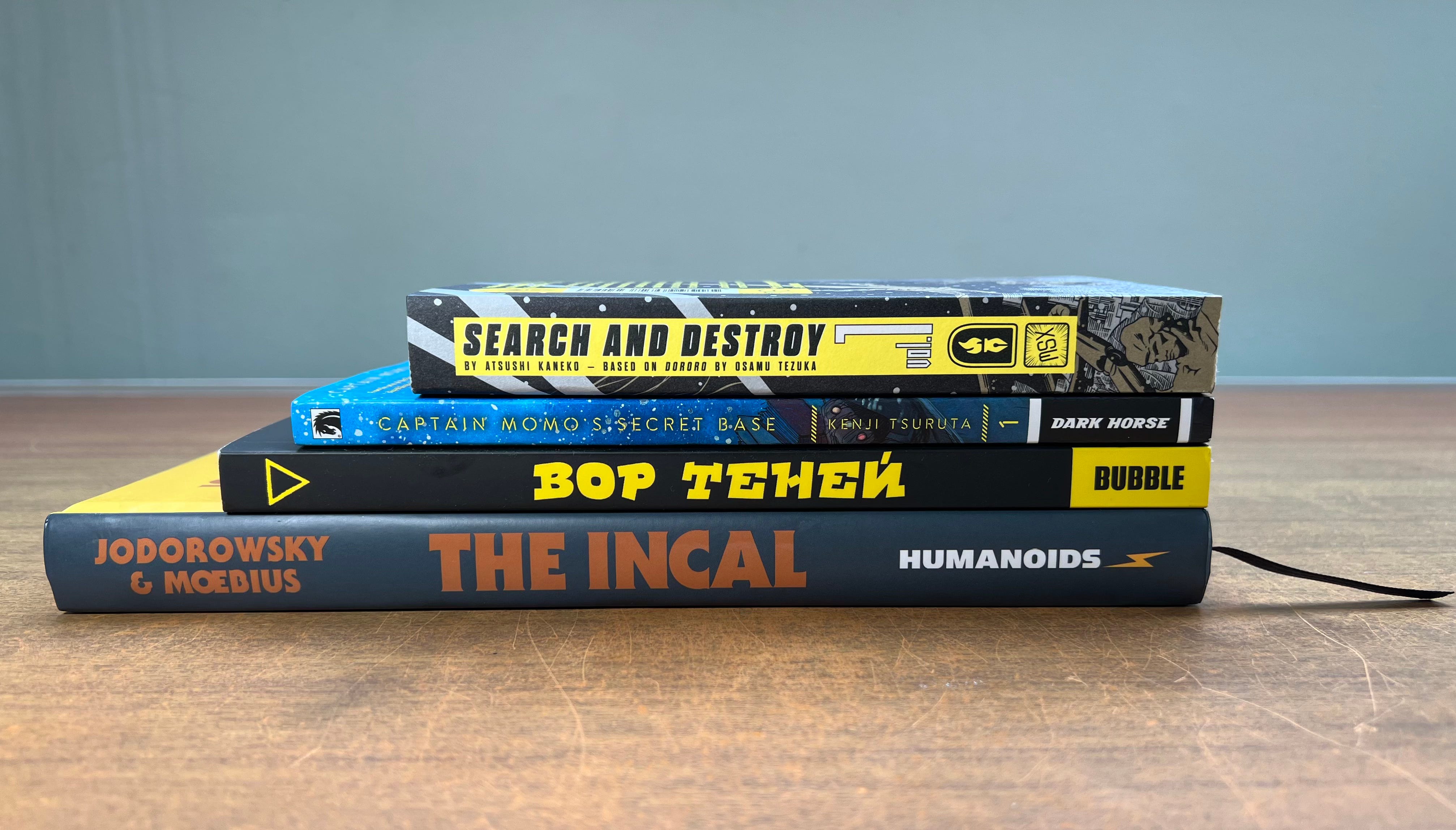
Here are some thoughts on the books:
The Incal
I envy those who read this back in the 80s. I can only imagine how mind-blowing, innovative and revolutionary The Incal would have been then! These days it remains very impressive, but there are so many more works of the imagination available now (including works likely inspired by The Incal - see for example, the art of the Monoist faction in MtG’s Edge of Eternities) that the effect is reduced.
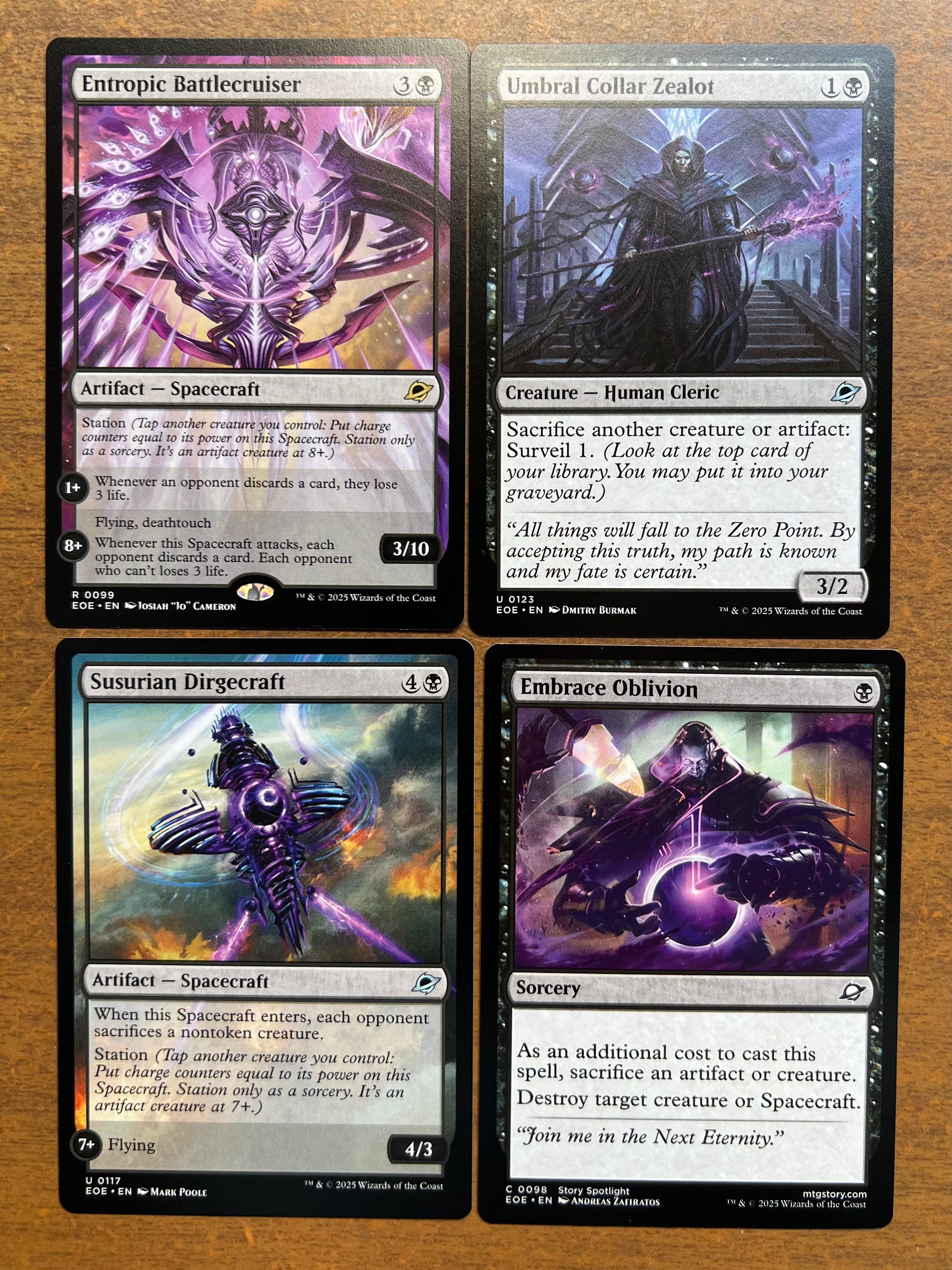
It goes without saying that Mœbius’ art is amazing and is the main draw. But I also want to give a shout-out to the three colorists who worked with him (Chaland, Beaumeney-Joannet and Janjetov) because the colours are beautiful, with the most incredible shades of green in particular.
I feel it’s held back by Jodorowsky’s limitations as a writer. I’ve read his Metabarons and had the same impression. He is wonderfully creative and visionary, but there is not enough structure to his stories - it feels like just one episode after another. Apparently, Jodorowsky did not have an overall script - and it shows! Sure, there are many mini-twists, but nothing gut-wrenching, because I never got the pause needed for a deeper connection with the characters.
Still, the story is enjoyable and playful. The pacing is brisk, and it feels like the creators were just having fun inventing one outlandish scenario after another. I wonder if they played D&D at all, because their meandering tale feels like an old school D&D adventure - unstructured, impromptu, one thing leads to another, with overarching connections being discovered along the way, rather than planned out in advance.
There are various spiritual and occult references, with the protagonist combining the Fool, the Hanged Man and John Dee in his Futuro-Elizabethan dress. Themes of reincarnation, cosmic love and mystical impregnation abound, but honestly I’m not sure if these references have genuine depth or are just stage props.
The influence of Dune is unmistakeable - and no wonder, given that the creators worked on a Dune film before this. I also wonder if they had access to the UK’s 2000 AD and the visions of Mega-City One there. If anyone can help me fill in the details, that would be appreciated!
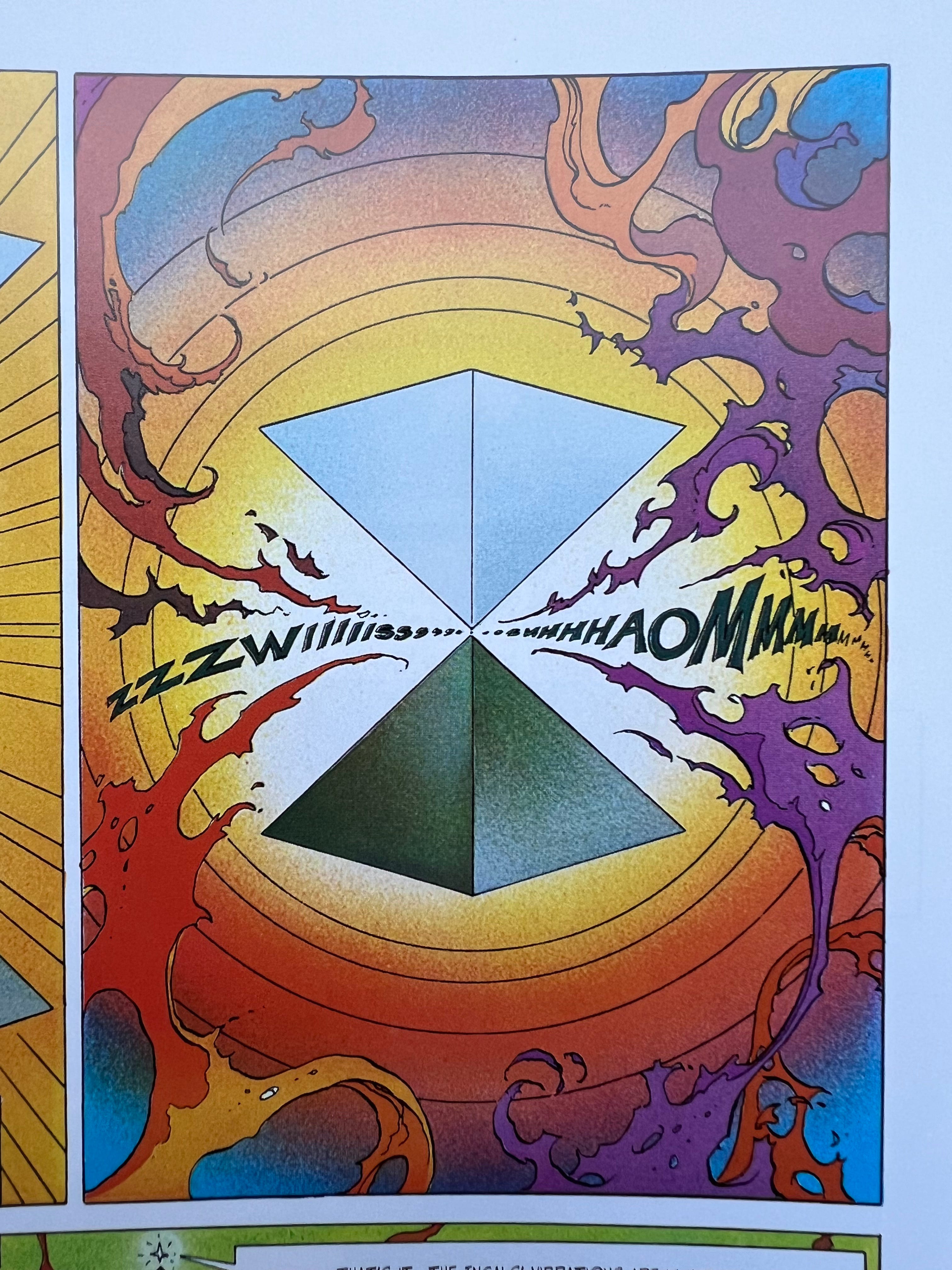
Reading The Incal unlocked a personal achievement for me - I have now read all of the top 10 of r/graphicnovel’s Top 100 list (link). It’s a great list and I’ve read about half of it in total.
A Sea of Love
This is a charming, wordless adventure that’s both funny and surprisingly dramatic. The story takes delightfully unpredictable turns, yet everything makes sense because the art does all the work, especially in showing the characters’ emotions. It’s a wonderful story: heartfelt, silly, and full of warmth. Good sailing, good fun.
La Réparation
Can your adult self go back in the past and give courage and reassurance to the child you were? Can a child look forward to that?
This is a wordless comic in which the author as an adult revisits her childhood trauma. It is poignant and to the point.
I particularly loved the image in the endpapers of the caduceus - with the staff replaced by a fountain pen.
Why not a higher score? It felt too short. I get that it was intentionally a short book, part of a series of short wordless comics. But I’m currently reading Lynda Barry (spoiler: it’s superb!) and any single chapter there feels just as heartbreaking and personal.
Thief of Shadows
This is a Russian comic, so I’m not sure if or when it will become available in translation. It has a great cover - showing the pyramid as a literal portal into the weirdness lurking behind the grey humdrum reality.
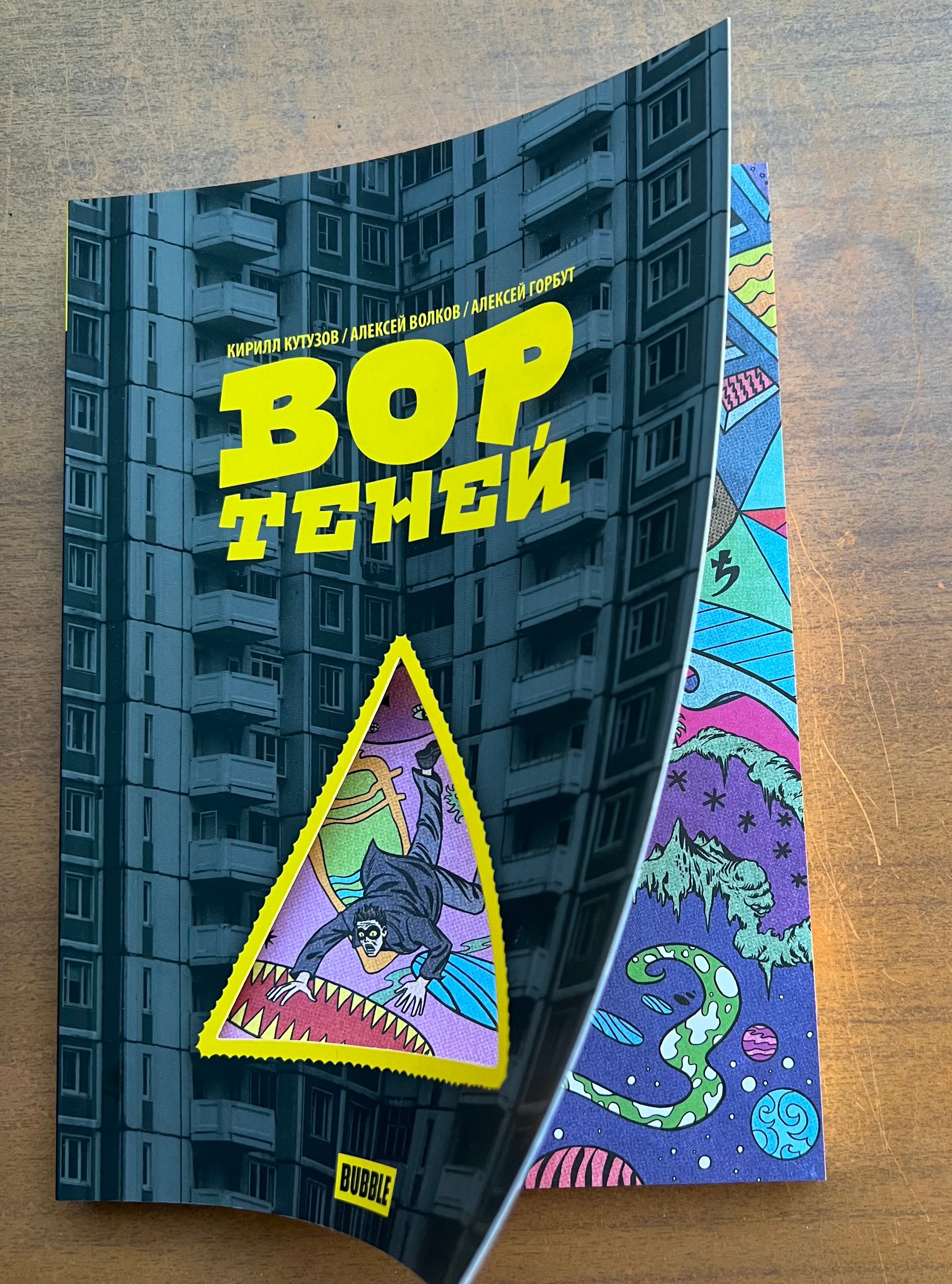
The main appeal is Alexey Gorboot’s pulpy artwork, with its bold lines and vivid colours. His style is very recognisable and was recently featured on the cover of Wyrd Science, a wonderful UK magazine about rpgs and tabletop games (link).
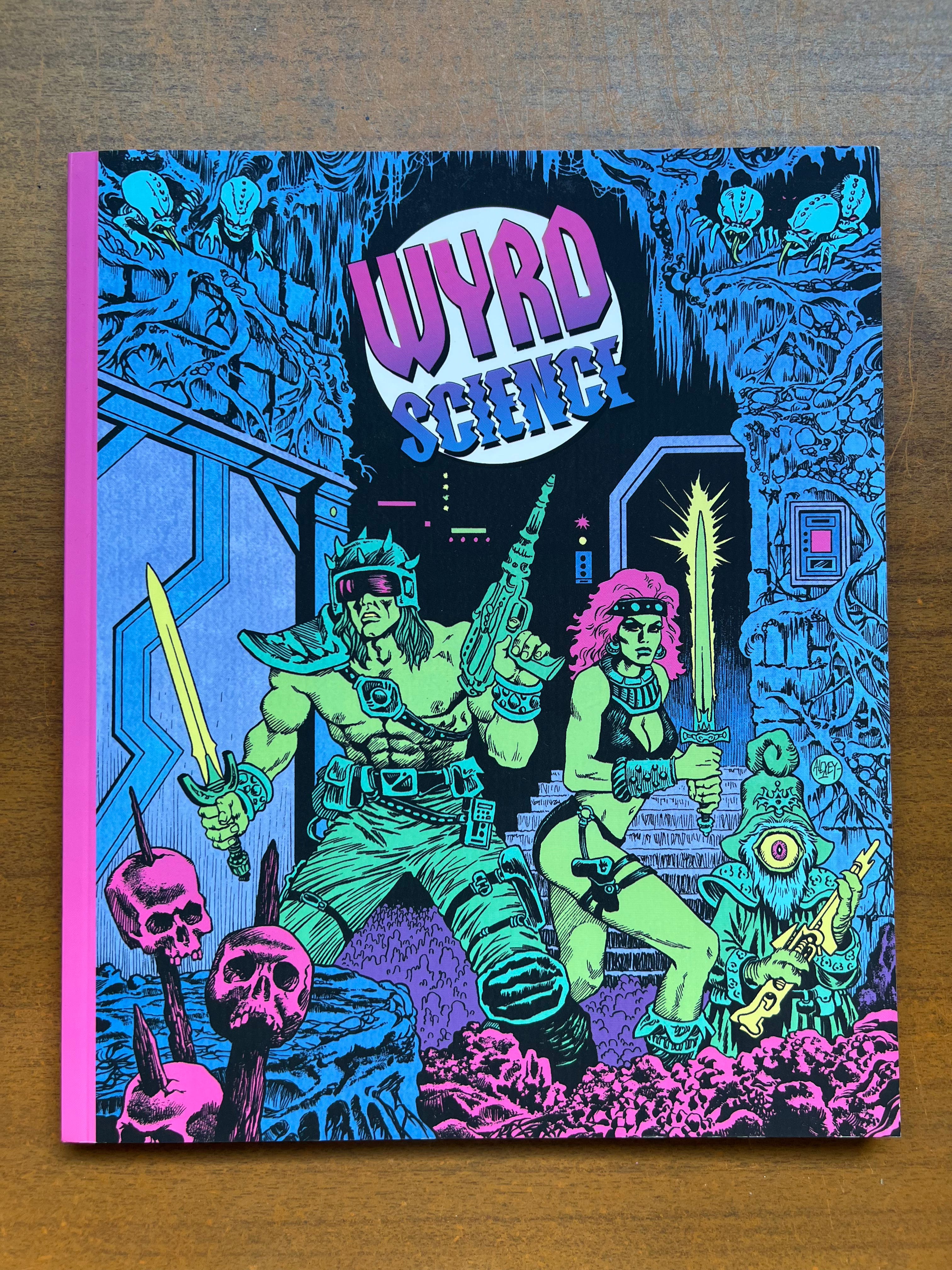
Having said that, I actually think Gorboot’s earlier black and white fantasy works (Necromancers of Zothique and Erekshigal) are his best, but they will be even harder to track down.
The story itself is fine, but nothing special. It feels like a very light version of something that Grant Morrison could have written back in the 90s.
Arzach
Four wordless stories, increasingly less coherent, about a pterodactyl rider.
Alright, maybe having Jodorowsky on writing duties wasn’t such a bad idea? This starts off as a fun sword & sorcery tale with a twist (reminiscent of early Armies stories by Dionnet, Picaret and Gal). But by the third tale, it unravels into psychedelia.
Mœbius’ drawings are gorgeous, of course. The desolate, post-apocalyptic landscape is vivid and the chunky pterodactyl is cute. This didn’t engage me much, but honestly, a book can’t be too bad if it features a pterodactyl rider!
Search & Destroy vol 1
Search & Destroy is a retelling of Tezuka’s Dororo (similar to how Pluto reimagined Astro Boy). I haven’t read all of Dororo, but its beginning (the preview on Amazon is very generous) maps to the beginning of the Search & Destroy series. Unfortunately, the comparison does the new version few favours.
I liked the art direction here, with its mix of vagrant androids and quasi-Soviet sculpture and brutalist architecture.
However, the changes in the narrative structure were unsuccessful.
Dororo started with a clear protagonist, created an “impossible” situation for him and then piled on threat after threat. Tezuka’s approach immediately created sympathy and tension.
Search & Destroy flips that script by starting with the villains and treating the main character as a mysterious executioner figure. The intention must have been suspense, but it creates distance instead. I felt little sympathy or connection with the anonymous part-machine hunting other part-machines. Especially as her targets are just not as interesting as Tezuka’s demons.
Captain Momo’s Secret Base vol 1
I’ve been meaning to read Emanon, but got this instead on a whim. A story about a lonely and naked space captain didn’t sound too bad! Unfortunately, this was deeply disappointing.
It’s a boring non-story about a boring and bored main character. She has the kind of opportunity to explore and discover that we readers can only dream of, but she’s too cool to care. I know it’s meant to be funny, but it just comes across as a sad and low-effort take. Maybe if space travel ever become mundane, this will have some relevance. But until then, I think an interest in discovery and science should be encouraged, and a lack of curiosity should be unfashionable.
This was a waste of the artist’s talent.